
 Full Text (PDF)
Abstract
This quasi-experimental study evaluated the effects of integrating traditional food knowledge into nutrition education on adolescent food preferences in rural Tabora, Tanzania. The study was conducted between August and October 2024, involving 271 form two and form three students from four rural secondary schools: Idete, Ibiri, Ndono, and Mabama. Idete and Ibiri served as the experimental group and received an eight-week intervention delivered by trained research assistants, focusing on traditional food knowledge, preparation, and cultural relevance. A food preference questionnaire was administered pre- and post-intervention, and post-test focus group discussions (FGDs) and classroom observations were also conducted. Quantitative analysis revealed a significant improvement in food preferences among the experimental group (mean post-test score = 4.10) compared to the control group (mean = 3.01), with a p-value < 0.001. Thematic analysis of FGDs indicated increased appreciation for traditional foods, intergenerational knowledge sharing, and greater interest in traditional food preparation. Observation checklists confirmed high levels of engagement and participation during sessions. Findings suggest that integrating culturally relevant traditional food education enhances adolescents’ food preferences and engagement in rural contexts. The study supports the incorporation of indigenous knowledge into nutrition curricula to promote healthier eating habits and preserve food heritage among youth in Tanzania and similar settings..
License
This is an open access article distributed under the Creative Commons Attribution License which permits unrestricted use, distribution, and reproduction in any medium, provided the original work is properly cited.
Article Type: Research Article
AQUADEMIA, Volume 10, Issue 1, 2026, Article No: ep26002
https://doi.org/10.29333/aquademia/17843
Publication date: 03 Feb 2026
Article Views: 1661
Article Downloads: 1005
Open Access HTML Content Download XML References How to cite this articleHTML Content
INTRODUCTION
The increasing consumption of ultra-processed foods among adolescents in Tanzania is a growing public health concern. These foods are often high in sugar, saturated fats, salt, and artificial additives are displacing nutrient-dense traditional diets (Popkin et al., 2020). The nutritional transition, characterized by a shift from whole, traditional foods to industrially processed products, has been linked to the rising prevalence of diet-related non-communicable diseases (NCDs) such as obesity, type 2 diabetes, and iron-deficiency anemia among adolescents (Popkin & Reardon, 2018; UNICEF, 2021). In Tanzania, studies show that adolescents increasingly prefer western-style snacks and sugar-sweetened beverages, with limited intake of fruits, vegetables, legumes, and traditional grains (Keding et al., 2013; Kimokoti & Hamer, 2008).
The underutilization of traditional foods among adolescents is further exacerbated by the lack of integration of indigenous knowledge into formal school curricula. Nutrition education in Tanzanian secondary schools often emphasizes standard food groups without contextualizing them within local food systems or cultural identity (URT-MoEST, 2021). As a result, students are less likely to understand the nutritional value and cultural significance of traditional diets (Madzorera et al., 2021). Scholars argue that culturally disconnected nutrition education contributes to the stigmatization of indigenous foods as “poor people’s food” and fails to promote sustainable dietary practices (Chivenge et al., 2015; Sibanda & Maposa, 2019).
In rural areas such as Uyui- Tabora, where agriculture is a mainstay, indigenous foods like millet porridge, baobab fruit pulp, local legumes (e.g., bambara nuts), and wild leafy vegetables (e.g., amaranth and cassava leaves) have historically provided balanced nutrition and food security (Chacha et al., 2021; Msuya et al., 2010). These foods are not only nutritionally rich but also environmentally resilient, adapted to local agro-ecological conditions (Padulosi et al., 2013). However, their consumption among adolescents has drastically declined, primarily due to shifting food preferences influenced by globalization, urbanization, advertising, and school food environments (Food and Agriculture Organization [FAO], 2019; Nguyen et al., 2022). This dietary shift poses risks to both nutritional well-being and cultural continuity.
Globally, there is growing recognition of the role of traditional food knowledge in achieving sustainable and inclusive nutrition outcomes (FAO, 2021; HLPE, 2017). The FAO and the United Nations Educational, Scientific and Cultural Organization (UNESCO) advocate for the inclusion of local food systems knowledge in school-based nutrition education as a strategy for preserving biodiversity, promoting cultural identity, and supporting healthier eating behaviors (FAO/UNESCO, 2019). Empirical evidence from Ghana, India, and Brazil shows that school interventions which incorporate local food narratives and preparation techniques improve children’s appreciation and preference for indigenous foods (Agyemang & Boateng, 2019; Gelli et al., 2020; Shankar et al., 2021).
Therefore, understanding how adolescents in rural Tanzania respond to the integration of traditional food knowledge in nutrition education is critical. Adolescence is a formative stage where lifelong food habits are shaped (WHO, 2022). School-based nutrition programs that embed culturally relevant food education not only improve immediate dietary behaviors but also foster long-term appreciation for traditional food systems (Ochieng et al., 2018; Story et al., 2009). This study addresses this gap by evaluating whether integrating traditional food knowledge into school nutrition education can positively influence adolescents’ food preferences in Tabora, thereby contributing to both nutritional improvement and cultural revitalization.
Problem Statement
In recent years, there has been a growing concern over the dietary patterns of adolescents in rural Tanzania, particularly in districts such as Uyui in Tabora Region. Adolescents are increasingly shifting from the consumption of traditional, nutrient-dense foods to ultra-processed, calorie-dense alternatives that are often high in sugar, salt, and saturated fats. This nutrition transition is largely influenced by globalization, changes in food environments, peer influence, and limited culturally contextualized nutrition education within schools (Nguyen et al., 2022; Popkin et al., 2020). In rural communities like Uyui, where indigenous foods such as millet porridge, baobab pulp, cassava leaves, and local legumes are readily available, these foods are now underutilized by younger generations.
The declining consumption of traditional foods among adolescents in Uyui is contributing to poor dietary diversity, increased risk of micronutrient deficiencies especially iron and vitamin A deficiencies and susceptibility to early-onset NCDs (Kimokoti & Hamer, 2008; UNICEF, 2021). Despite the nutritional richness and environmental resilience of local foods, these items are often perceived by youth as backward or less desirable, primarily because school-based nutrition programs rarely incorporate indigenous food knowledge or cultural food heritage in their content (Msuya et al., 2010; URT-MoEST, 2021). The curriculum’s lack of cultural relevance weakens students’ connections to their food systems and may inadvertently encourage reliance on unhealthy, processed options. Furthermore, the erosion of traditional food knowledge not only compromises adolescent health outcomes but also poses a threat to the preservation of local food systems and biodiversity in Tabora Region. Indigenous food systems have long sustained rural livelihoods and ecological balance, but without strategic efforts to transmit this knowledge to the younger generation, these systems are at risk of disappearing (Chivenge et al., 2015; Padulosi et al., 2013). Integrating traditional food knowledge into nutrition education has the potential to empower adolescents to make healthier food choices while preserving their cultural identity and promoting sustainable food practices.
Despite national and international policy frameworks emphasizing the importance of culturally responsive nutrition education (FAO/UNESCO, 2019; HLPE, 2017), there remains a critical gap in empirical evidence from rural Tanzanian settings, especially from districts like Uyui. It is unclear whether contextualized school-based interventions that include traditional food knowledge can effectively influence adolescents’ food preferences and promote healthier dietary behaviors in such settings. Therefore, this study seeks to evaluate the effects of integrating traditional food knowledge into school nutrition education on adolescent food preferences in Uyui District, Tabora Region. The findings will inform education and health policy stakeholders on how culturally grounded nutrition education can be leveraged to address adolescent nutrition challenges while preserving indigenous food systems in rural Tanzania.
In rural Tanzania, including districts such as Uyui in Tabora Region, adolescent nutrition is increasingly affected by the growing shift from traditional diets to ultra-processed foods. These modern dietary patterns, often characterized by high consumption of sugary beverages, fried snacks, and refined grains, have been associated with poor dietary quality and increasing vulnerability to both undernutrition and NCDs (Popkin et al., 2020; UNICEF, 2021). Traditional foods such as millet porridge, baobab fruit pulp, bambara groundnuts, and wild leafy vegetables which were once staples in households are now under-consumed by adolescents, partly due to negative perceptions and lack of exposure within formal education systems (Keding et al., 2013; Msuya et al., 2010).
Although indigenous foods in Uyui are nutritionally rich, resilient to climatic stress, and locally accessible, their low consumption among youth reflects cultural marginalization and lack of structured learning around traditional food systems in schools. School nutrition education programs in Tanzania often adopt generalized dietary guidelines without connecting to local food systems or cultural identity, thus failing to resonate with students’ lived realities (Nguyen et al., 2022; URT-MoEST, 2021). Consequently, adolescents may develop preferences that exclude traditional foods, thereby missing out on vital nutrients and losing touch with cultural food heritage (FAO/UNESCO, 2019; Madzorera et al., 2021). This disconnect between school-based nutrition education and local food culture not only weakens the impact of such programs but also contributes to the erosion of indigenous food knowledge among the younger generation. This loss has broader implications, as it threatens community resilience, agrobiodiversity, and intergenerational knowledge transfer in rural areas like Uyui (Chivenge et al., 2015; Padulosi et al., 2013). Studies have emphasized that sustainable food systems depend in part on the revitalization and utilization of underutilized crops and indigenous food practices, especially in communities vulnerable to food insecurity (FAO, 2021; HLPE, 2017).
Despite global advocacy for culturally contextualized nutrition education including recommendations from FAO and UNESCO evidence on the effectiveness of integrating traditional food knowledge into school curricula in rural Tanzanian contexts remains limited (FAO/UNESCO, 2019; Gelli et al., 2020). While international experiences suggest that such integration can improve dietary behavior and cultural identity (Agyemang & Boateng, 2019; Shankar et al., 2021), there is a need for localized research to determine its relevance and effectiveness in regions like Tabora, where nutrition-related vulnerabilities are intertwined with cultural dynamics and environmental challenges. This study, therefore, addressed this knowledge gap by evaluating the effects of traditional food knowledge integration in school-based nutrition education on adolescent food preferences in Uyui District, Tabora Region.
Objectives of the Study
The main objective of the study was to evaluate the effects of integrating traditional food knowledge into school-based nutrition education on the food preferences of adolescents in rural Tabora.
Specifically, the study sought to:
-
assess baseline food preferences among adolescents in selected secondary schools in Uyui District prior to the intervention,
-
determine the changes in adolescents’ food preferences following the integration of traditional food knowledge into the nutrition education curriculum, and
-
explore adolescents’ perceptions and attitudes towards traditional foods after exposure to culturally contextualized nutrition education.
Significance of the Study
This study was significant for several reasons. Firstly, it addressed an urgent public health and educational concern regarding the erosion of traditional food knowledge and the increasing adoption of nutritionally poor dietary habits among adolescents in rural Tanzania. In Uyui District, where indigenous food resources are abundant yet underutilized by the youth, the findings provided critical insight into how contextualized nutrition education can revive interest and preference for traditional diets. Secondly, the study contributed to the growing body of research on culturally relevant nutrition interventions. While there is global recognition of the importance of integrating indigenous food systems into education (FAO/UNESCO, 2019; HLPE, 2017), limited empirical evidence exists on how this approach influences adolescents’ food choices in Tanzanian settings. In evaluating behavioral change following an intervention, the study generated locally grounded data to inform future school-based nutrition initiatives.
Thirdly, the study had implications for curriculum reform and education policy. The findings offered practical recommendations on how nutritional education can be made more responsive to local contexts, thereby increasing its relevance and effectiveness. This aligns with national goals of strengthening school health programs and improving the quality of education through localized content (URT-MoEST, 2021). Moreover, the study was valuable for community development and intergenerational knowledge preservation. Revitalizing adolescents’ connection to traditional foods contributes to the transmission of cultural heritage, supports agrobiodiversity, and promotes sustainable dietary practices at the household and community level (Padulosi et al., 2013). The research outcomes were thus relevant not only for schools and health institutions, but also for families, farmers, and cultural leaders in Tabora Region. Finally, the study responded to sustainable development goals (SDGs), particularly SDG 2 (zero hunger), SDG 3 (good health and well-being), and SDG 4 (quality education). It demonstrated how multi-sectoral collaboration between the education, agriculture, and health sectors can foster healthier, more sustainable, and culturally rooted food environments for Tanzanian adolescents.
Theoretical Framework
This study was guided by a combination of educational and behavioral theories that explain how individuals acquire knowledge, develop preferences, and change behavior in response to social and cultural stimuli. Specifically, the study drew on three theoretical perspectives: social cognitive theory, constructivist learning theory, and food preference learning theory (Table 1).
Table 1. Theory-to-practice alignment in the study
|
Social cognitive theory (Bandura, 1986) emphasizes the importance of observational learning, self-efficacy, and the reciprocal interaction between individual, behavior, and environment. Within the context of this study, adolescents’ food preferences were viewed as shaped by their social environment, including family, peers, teachers, and cultural norms. Through incorporating traditional food knowledge into the school curriculum and using role models (e.g., teachers or community elders) to promote indigenous foods, the intervention sought to positively influence students’ behavior through enhanced awareness, modeled behavior, and increased confidence in choosing traditional foods.
Constructivist learning theory, as developed by Piaget (1972) and later expanded by Vygotsky (1978), posits that learners actively construct knowledge through interactions with their environment and prior cultural experiences. This theory underpinned the pedagogical design of the intervention, which encouraged students to explore, discuss, and reflect on traditional food systems in a participatory and context-sensitive manner. Learning activities such as group discussions, storytelling, local recipe demonstrations, and food tasting sessions enabled learners to connect new knowledge with their lived experiences, making learning more meaningful and sustainable.
Food preference learning theory (Birch, 1999) explains how children and adolescents develop food preferences through repeated exposure, associative learning, and social influences. According to this theory, individuals are more likely to accept and prefer foods that they have been repeatedly exposed to in positive settings. The intervention applied this theory by ensuring that adolescents engaged with traditional foods not only cognitively through lessons but also experientially through sensory exposure and community interaction. This multi-modal exposure aimed to reinforce positive attitudes toward indigenous foods and alter food preferences over time.
Together, these theories provided a strong foundation for understanding how nutrition education that integrates traditional food knowledge can influence adolescent food choices. While social cognitive theory explained the social and environmental factors influencing behavior, constructivism informed the instructional approach, and food preference learning theory addressed the mechanisms behind the development of food preferences. The integration of these theories allowed for a holistic design of the intervention and a multi-dimensional analysis of its outcomes.
METHODOLOGY
Research Design
This study employed a quasi-experimental pre-/post-test control group design to examine the effects of integrating traditional food knowledge into school-based nutrition education on adolescents’ food preferences. This design was chosen due to its practicality in school settings where random assignment is not always possible. The experimental group received a tailored nutrition education program incorporating traditional food knowledge, while the control group followed the conventional curriculum without modification.
Study Area
The study was conducted in Uyui District, located in Tabora Region, western Tanzania. The district is predominantly rural and home to a variety of indigenous food crops such as millet, sorghum, baobab, and local leafy vegetables. Four rural public secondary schools namely Idete, Ibiri, Ndono, and Mabama were purposively selected for their accessibility, willingness to participate, and representativeness of the rural context. These schools reflect the socio-cultural environment where traditional food systems are still present but underutilized among adolescents.
Target Population
The target population consisted of form two and form three students aged between 14 and 17 years enrolled in the four selected secondary schools in Uyui District. These students were chosen because of their developmental readiness and their exposure to health and nutrition topics in the school curriculum.
Sample Size and Sampling Procedure
A total of 271 students participated in the study. Schools were purposively selected, and stratified sampling was used within each school to ensure proportional representation by gender and class level. Two schools (Idete and Ibiri) were assigned to the experimental group, while the other two (Ndono and Mabama) formed the control group (Table 2).
Table 2. Distribution of study participants by school, sex, and class level (N = 271) (Quasi Experimental Study, 2024)
|
Intervention Procedure
The intervention was implemented over a period of eight weeks, from August to October 2024, in two purposively selected public secondary schools; Idete and Ibiri which formed the experimental group. The remaining two schools, Ndono and Mabama, served as the control group. Out of the total 271 students who participated in the study, 139 students (Idete: 74 and Ibiri: 65) were in the experimental group, while 132 students (Ndono: 58 and Mabama: 54) were in the control group. The experimental group received a specially designed nutrition education intervention that integrated traditional food knowledge into weekly lessons. A total of eight sessions were delivered once per week during life skills or civics periods. The instructional content emphasized culturally embedded food practices and involved a mix of interactive and experiential learning approaches. Activities included
-
discussions on the cultural relevance and nutritional benefits of indigenous foods such as millet, baobab pulp, cassava leaves, and local legumes,
-
food tasting sessions, where students sampled traditional dishes prepared by local women and teachers,
-
storytelling and interviews with community elders to document intergenerational knowledge about food,
-
food mapping and recipe demonstrations, allowing students to visualize food sources and participate in food preparation, and
-
creative reflection activities, including group posters, essays, and dramatizations about local food identity.
To facilitate the intervention, the study engaged four trained research assistants, all of whom were student teachers from the school of education at Sokoine University of Agriculture, majoring in biology. These assistants were carefully selected during their teaching practice placement, which coincided with the study timeline, ensuring their availability without interfering with university coursework or exams. Each research assistant was assigned to one school in the experimental group, working closely with classroom teachers and under the supervision of the lead researcher. Prior to the implementation phase, they underwent a two-day orientation that covered instructional strategies, cultural sensitivity, child safeguarding, and data recording procedures. Their role was to support the delivery of content, engage learners in experiential activities, and maintain consistency across the two experimental schools. The control group, meanwhile, received standard curriculum-based health and nutrition education with no special integration of traditional food knowledge.
Data Collection Methods
The study used both quantitative and qualitative data collection methods. Quantitative data were collected using a food preference questionnaire (FPQ) administered before and after the intervention. The FPQ included Likert-scale items measuring students’ preferences for traditional versus processed foods. Qualitative data were collected through post-intervention focus group discussions (FGDs) to capture students’ perceptions, and observation checklists were used to record levels of participation and engagement during sessions.
Data Analysis
Quantitative data were analyzed using SPSS version 26. Paired sample t-tests were used to determine within-group changes in food preferences, while independent sample t-tests compared differences between experimental and control groups. Descriptive statistics (means [Ms], standard deviations [SDs], and frequencies) were used to summarize data. Qualitative data from FGDs were thematically analyzed to identify recurring themes related to attitudes and perceptions of traditional foods.
Ethical Considerations
Ethical approval was obtained from the Sokoine University of Agriculture Research Ethics Committee. Permissions to conduct the study were granted by the Tabora Regional Education Office and school administrations. Written informed consent was secured from participants, and assent was obtained from students under the age of 18. All participants were assured of confidentiality and their right to withdraw at any time without consequence.
FINDINGS AND DISCUSSION
The Effects of Traditional Food Knowledge Integration on Adolescents’ Food Preferences
This study sought to evaluate how integrating traditional food knowledge into nutrition education would affect adolescents’ food preferences in rural Tanzania. A total of 271 students from four rural secondary schools (Idete, Ibiri, Ndono, and Mabama) participated in the study. Idete and Ibiri were assigned to the experimental group, while Ndono and Mabama formed the control group. Students in both groups completed an FPQ before and after the intervention, which measured their preferences for both traditional and processed foods on a five-point Likert scale ranging from 1 (strongly dislike) to 5 (strongly like).
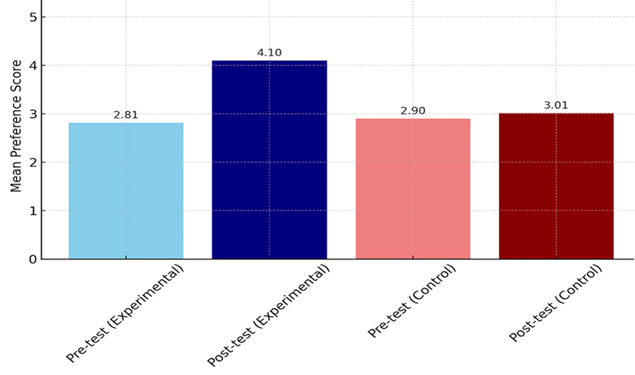
The results showed a marked improvement in food preferences among students in the experimental group. As shown in Table 3, their mean preference score increased from 2.81 (SD = 0.49) at pre-test to 4.10 (SD = 0.40) at post-test. Meanwhile, the control group exhibited only a slight increase in their mean scores from 2.90 (SD = 0.50) to 3.01 (SD = 0.48). This suggests that the intervention, which included culturally grounded lessons, significantly influenced the students’ attitudes toward traditional foods.
Table 3. M and SD of food preferences (Quasi Experimental Study, 2024)
|
To further validate these results, an independent samples t-test was conducted to compare the post-test scores between the experimental and control groups. The analysis yielded a t-statistic of 20.23 and a p value less than 0.001, indicating a statistically significant difference between the two groups. This provides strong evidence that the intervention was effective in improving students’ preferences for traditional foods (Figure 1).
The substantial improvement in the experimental group can be attributed to the nature of the intervention, which employed hands-on, culturally relevant activities such as traditional food tasting, community storytelling, food demonstrations, and elder engagement. These activities allowed students to reconnect with their local food culture and perceive traditional foods as not only healthy but also enjoyable and relevant. Such findings are consistent with previous research by Story et al. (2002) and Contento (2008), who found that culturally tailored nutrition education improves adolescents’ dietary behaviors and attitudes. Moreover, the findings support the broader recommendations of the FAO (2019) and UNICEF (2021), which emphasize the role of indigenous food systems and cultural practices in promoting sustainable and healthy diets among adolescents, particularly in rural and resource-limited settings. These organizations advocate for strengthening food literacy through localized knowledge, which aligns with the results of this study.
Students’ Perceptions Toward Traditional Food Knowledge Integration in Nutrition Education
To address this objective, qualitative data were collected through post-intervention FGDs involving form two and form three students from Idete and Ibiri secondary schools, the experimental group. The FGDs captured students’ reflections on the relevance, impact, and experiences of engaging with traditional food knowledge during the eight-week intervention. A thematic analysis of the FGD transcripts yielded four key themes: increased awareness and appreciation of traditional foods; learning through experience and culture; connection to family and cultural identity; and changes in food preferences and intentions.
Theme 1. Increased awareness and appreciation of traditional foods
A prominent theme that emerged from the FGDs was a newfound awareness of the value and benefits of traditional foods. Before the intervention, many students held negative perceptions of indigenous foods, often associating them with poverty, rural backwardness, or elderly consumption. However, as they engaged with the content of the program, students began to express a growing appreciation for foods such as millet porridge, baobab juice, pumpkin leaves, cassava leaves, and local legumes. Numerous students were surprised by the nutritional value these foods provided particularly in terms of iron, fiber, vitamins, and energy content. One student remarked, “I used to avoid kisamvu [cassava leaves], but now I know it helps with blood and is better than eating chips every day.” This shift in understanding reflects the power of culturally responsive education to challenge misconceptions and reshape beliefs. The finding aligns with Contento (2008) and Chambers et al. (2017), who assert that when nutrition education is grounded in the cultural context of learners, it leads to both cognitive and behavioral transformation.
Theme 2. Learning through experience and culture
The second major theme was the role of experiential and culturally embedded learning approaches in facilitating understanding. Students consistently highlighted the interactive nature of the sessions as one of the most impactful aspects of the intervention. Activities such as traditional food tasting, cooking demonstrations with community members, elder storytelling, and local games transformed the classroom into an engaging and practical space for learning. One student shared, “I will never forget the taste of pumpkin leaf stew we cooked with mama from the village. It was fun and different from usual lessons.” Such responses suggest that multisensory learning enabled students not just to acquire facts but to connect emotionally and culturally with the content. These findings are well-supported by Kolb’s (1984) experiential learning theory, which posits that learning is most effective when learners are actively involved in meaningful experiences. Additionally, Bransford et al. (2000) emphasize the value of contextual learning in shaping deeper understanding and long-term retention. The active pedagogical strategies used in this intervention were crucial for increasing motivation and sustaining student interest.
Theme 3. Connection to family and cultural identity
The third theme highlighted the intergenerational dimension of learning that was stimulated by the intervention. Students reported taking their classroom experiences into their homes by initiating conversations with parents, guardians, and grandparents about the traditional foods discussed in class. This home-school link enabled students to strengthen their bonds with elders and access oral knowledge that is often excluded from formal schooling. For instance, one student noted, “After the lesson, I asked my grandmother how she prepares millet porridge, and now we cook it together.” Such interactions not only reinforced the students’ academic learning but also contributed to a deeper sense of belonging, identity, and cultural continuity. This pattern resonates strongly with Vygotsky’s (1978) sociocultural theory, which views learning as inherently social and cultural, mediated through tools such as language, tradition, and community practices. The program served as a bridge that reconnected students with their heritage, thereby making education more relevant and affirming.
Theme 4. Change in food preferences and intentions
The final theme concerned the shifts in students’ food preferences and their reported intention to adopt healthier, traditional diets. Many students expressed a new openness to trying and consuming indigenous foods, replacing or reducing their consumption of processed and ultra-processed snacks, such as sugary drinks, noodles, and fried street foods. For example, one student explained, “Now I ask my mother to buy more traditional vegetables instead of noodles.” While the study did not track long-term behavior change, these self-reported intentions are a promising sign of cognitive and attitudinal change that may lead to improved dietary behaviors. This aligns with the assertions of UNICEF (2021) and the FAO (2019), which advocate for the inclusion of indigenous knowledge in adolescent health and nutrition programming as a pathway to sustainable dietary transformation.
Levels of Participation and Engagement Among Adolescents During Nutrition Education Sessions
This objective is to systematically record and analyze the behavioral indicators of student participation and engagement during the intervention sessions conducted in the experimental schools (Idete and Ibiri secondary schools). Trained research assistants used structured observation checklists during eight weekly nutrition education sessions. Observation data were collected on key indicators such as attentiveness, question-asking, contribution to discussions, enthusiasm in activities, and respectfulness during group tasks. Each indicator was rated on a 5-point scale (1 = very low to 5 = very high). Table 4 shows the summary of mean scores across all sessions.
Table 4. Mean scores of student participation and engagement indicators (Quasi Experimental Study, 2024)
|
The consistently high mean scores (above 4.0) indicate strong student engagement and active participation throughout the intervention period. The highest scores were observed in indicators related to respectful collaboration and enthusiastic participation in practical activities, suggesting that the use of interactive and culturally grounded pedagogies successfully motivated students. These observations corroborate findings from the qualitative data, where students reported enjoyment and active involvement in experiential learning activities such as cooking demonstrations and storytelling. The findings align with educational theories such as Vygotsky’s (1978) sociocultural theory, which emphasizes the role of social interaction and cultural tools in learning, and Bransford et al.’s (2000) framework on active learning. The results highlight that engagement is not merely cognitive but also social and emotional, which is critical for sustained behavior change (Fredricks et al., 2004).
CONCLUSION
The study concludes that integrating traditional food knowledge into nutrition education meaningfully improves adolescents’ food preferences in rural settings. The statistically significant increase in food preference scores, along with qualitative reports of enhanced engagement, cultural pride, and behavior intention, demonstrate that culturally relevant pedagogy can serve as a powerful tool for dietary behavior change among youth. The intervention succeeded in not only shifting individual attitudes but also strengthening cultural identity, fostering intergenerational knowledge exchange, and restoring the value of traditional food systems. These findings are especially relevant for rural communities undergoing dietary transitions and facing rising health risks from ultra-processed food consumption.
Recommendations
For educational practice
-
Integrate traditional food knowledge into school nutrition curricula, especially in rural areas where indigenous foods are locally available and culturally embedded.
-
Adopt experiential learning strategies such as food demonstrations, storytelling, and field visits to enhance students’ engagement and knowledge retention.
-
Encourage intergenerational learning opportunities by involving elders, parents, and community members in school-based nutrition programs.
For policy and curriculum developers
-
National curriculum reforms should include provisions for culturally responsive nutrition education that promotes indigenous knowledge and local food systems.
-
Develop teacher training programs that equip educators with skills to deliver.
For future research
-
Conduct longitudinal studies to assess the sustained behavioral impact of traditional food knowledge integration on adolescent dietary practices.
-
Expand research into urban settings to examine whether similar interventions can counter the urban preference for ultra-processed foods.
-
Investigate the nutritional composition and availability of traditional foods across regions to inform school feeding programs.
Funding: No external funding is received for this article.
Ethical statement: The author stated that ethical approval for this study was obtained from the Sokoine University of Agriculture Research Ethics Committee on 15 July 2024 (Approval Code: SUA/PGS/2024/078). Written informed consents were obtained from the participants.
AI statement: The author stated that generative artificial intelligence (AI) or AI-based tools were not used in the design of the study, data collection, data analysis, or interpretation of results. AI tools were used only for language editing and clarity, and the author takes full responsibility for the content of the manuscript.
Declaration of interest: The author declares that there are no competing interests.
Availability of data and materials: All data generated or analyzed during this study are available for sharing when appropriate request is directed to the author.
References
- Agyemang, C., & Boateng, L. (2019). School-based nutrition education and indigenous food promotion in Ghana. Journal of Nutrition Education and Behavior, 51(4), 450-458.
- Bandura, A. (1986). Social foundations of thought and action: A social cognitive theory. Prentice-Hall.
- Birch, L. L. (1999). Development of food preferences. Annual Review of Nutrition, 19, 41-62. https://doi.org/10.1146/annurev.nutr.19.1.41
- Bransford, J. D., Brown, A. L., & Cocking, R. R. (2000). How people learn: Brain, mind, experience, and school. National Academy Press.
- Chacha, J. S., Laswai, H. S., & Chove, B. E. (2021). Nutritional potential of indigenous leafy vegetables consumed in Tanzania. African Journal of Food, Agriculture, Nutrition and Development, 21(2), 17540-17555.
- Chambers, S. A., Lobb, A. E., Butler, L. T., Harvey, K., & Traill, W. B. (2017). The influence of social norms on food intake. Appetite, 86, 1-9.
- Chivenge, P., Mabhaudhi, T., Modi, A. T., & Mafongoya, P. (2015). The potential role of neglected and underutilised crop species in improving diets. Food Security, 7(5), 941-955.
- Contento, I. R. (2008). Nutrition education: Linking research, theory, and practice. Asia Pacific Journal of Clinical Nutrition, 17(S1), 176-179.
- FAO. (2019). Sustainable healthy diets: Guiding principles. Food and Agriculture Organization of the United Nations. https://openknowledge.fao.org/server/api/core/bitstreams/03bf9cde-6189-4d84-8371-eb939311283f/content
- FAO. (2021). Indigenous peoples’ food systems: Insights on sustainability and resilience. Food and Agriculture Organization of the United Nations. https://www.fao.org/in-action/kore/publications/publications-details/en/c/1414665/
- FAO/UNESCO. (2019). Education for sustainable food systems. Food and Agriculture Organization of the United Nations & UNESCO. https://openknowledge.fao.org/server/api/core/bitstreams/11f9288f-dc78-4171-8d02-92235b8d7dc7/content
- Fredricks, J. A., Blumenfeld, P. C., & Paris, A. H. (2004). School engagement: Potential of the concept. Review of Educational Research, 74(1), 59-109. https://doi.org/10.3102/00346543074001059
- Gelli, A., Neeser, K., Drake, L., & Bundy, D. (2020). School-based food and nutrition education: Evidence from low- and middle-income countries. Food and Nutrition Bulletin, 41(2), 168-190.
- HLPE. (2017). Nutrition and food systems. High Level Panel of Experts on Food Security and Nutrition. https://openknowledge.fao.org/server/api/core/bitstreams/4ac1286e-eef3-4f1d-b5bd-d92f5d1ce738/content
- Keding, G. B., Msuya, J. M., Maass, B. L., & Krawinkel, M. B. (2013). Dietary patterns and nutritional health of women in rural Tanzania. Public Health Nutrition, 14(4), 658-666.
- Kimokoti, R. W., & Hamer, D. H. (2008). Nutrition, health, and aging in sub-Saharan Africa. Nutrition Reviews, 66(11), 611-623. https://doi.org/10.1111/j.1753-4887.2008.00113.x
- Kolb, D. A. (1984). Experiential learning: Experience as the source of learning and development. Prentice Hall.
- Madzorera, I., Isanaka, S., & Giller, K. E. (2021). Food systems and adolescent nutrition in sub-Saharan Africa. The Lancet Child & Adolescent Health, 5(1), 22-34.
- Msuya, J. M., Mamiro, P., & Weinberger, K. (2010). The role of indigenous vegetables in household food security in Tanzania. Food Security, 2(3), 223-238.
- Nguyen, T. T., Popkin, B. M., & Reardon, T. (2022). Urbanization and food consumption transitions in low-income countries. Global Food Security, 33, Article 100630.
- Ochieng, J., Afari-Sefa, V., & Karanja, D. (2018). Consumer perceptions of indigenous foods in Africa. Food Security, 10(5), 1171-1185.
- Padulosi, S., Thompson, J. and Rudebjer, P. (2013). Fighting poverty, hunger and malnutrition with neglected and underutilized species (NUS): Needs, challenges and the way forward. Bioversity International, Rome.
- Piaget, J. (1972). The psychology of the child. Basic Books.
- Popkin, B. M., & Reardon, T. (2018). Obesity and the food system transformation in developing countries. Economics & Human Biology, 31, 1-14.
- Popkin, B. M., Corvalan, C., & Grummer-Strawn, L. M. (2020). Dynamics of the double burden of malnutrition. The Lancet, 395(10217), 65-74. https://doi.org/10.1016/S0140-6736(19)32497-3
- Shankar, B., Poole, N., & Quisumbing, A. (2021). Promoting indigenous foods for nutrition-sensitive agriculture. Global Food Security, 29, Article 100520.
- Sibanda, L. M., & Maposa, R. S. (2019). Indigenous food systems and nutrition education in Africa. Journal of Rural Studies, 68, 161-170.
- Story, M., Kaphingst, K. M., Robinson-O’Brien, R., & Glanz, K. (2009). Creating healthy food environments. Annual Review of Public Health, 29, 253-272. https://doi.org/10.1146/annurev.publhealth.29.020907.090926
- Story, M., Neumark-Sztainer, D., & French, S. (2002). Individual and environmental influences on adolescent eating behaviors. Journal of the American Dietetic Association, 102(3), S40-S51. https://doi.org/10.1016/S0002-8223(02)90421-9
- UNICEF. (2021). The state of the world’s children 2021: On my mind–Promoting, protecting and caring for children’s mental health. United Nations Children’s Fund. https://www.unicef.org/reports/state-worlds-children-2021
- URT-MoEST. (2021). Secondary school curriculum for Tanzania. United Republic of Tanzania, Ministry of Education, Science and Technology.
- Vygotsky, L. S. (1978). Mind in society: The development of higher psychological processes. Harvard University Press.
- WHO. (2022). Adolescent nutrition: A review of the situation. World Health Organization. https://iris.who.int/items/4185498f-7685-4054-90e1-0056c12c9e4d
How to cite this article
APA
Athuman, J. J. (2026). Evaluating the effects of traditional food knowledge integration in nutrition education on adolescent food preferences in Uyui-Rural Tabora, Tanzania. Aquademia, 10(1), ep26002. https://doi.org/10.29333/aquademia/17843
Vancouver
Athuman JJ. Evaluating the effects of traditional food knowledge integration in nutrition education on adolescent food preferences in Uyui-Rural Tabora, Tanzania. AQUADEMIA. 2026;10(1):ep26002. https://doi.org/10.29333/aquademia/17843
AMA
Athuman JJ. Evaluating the effects of traditional food knowledge integration in nutrition education on adolescent food preferences in Uyui-Rural Tabora, Tanzania. AQUADEMIA. 2026;10(1), ep26002. https://doi.org/10.29333/aquademia/17843
Chicago
Athuman, Jamal Jumanne. "Evaluating the effects of traditional food knowledge integration in nutrition education on adolescent food preferences in Uyui-Rural Tabora, Tanzania". Aquademia 2026 10 no. 1 (2026): ep26002. https://doi.org/10.29333/aquademia/17843
Harvard
Athuman, J. J. (2026). Evaluating the effects of traditional food knowledge integration in nutrition education on adolescent food preferences in Uyui-Rural Tabora, Tanzania. Aquademia, 10(1), ep26002. https://doi.org/10.29333/aquademia/17843
MLA
Athuman, Jamal Jumanne "Evaluating the effects of traditional food knowledge integration in nutrition education on adolescent food preferences in Uyui-Rural Tabora, Tanzania". Aquademia, vol. 10, no. 1, 2026, ep26002. https://doi.org/10.29333/aquademia/17843