 Full Text (PDF)
Abstract
Deep environmental education model is key to solving water and environmental problems. We are convinced that solving water and environmental problems is an exciting opportunity to create a better world for future generations. These tools have the potential to remind us of our relationship with nature and human beings. They have the potential to guide us in finding meaning and fostering reconciliation with nature and our fellow human beings. It is also understood that they provide support for scientific and technological bases, and participation in finding solutions is encouraged. Deep environmentalism encourages us to build healthy relationships with the creator, the universe, the environment and human beings. If we do not to be to disaster causing that contradiction between human being and environment, including poverty, racial segregation, and overconsumption. Deep environmentalism or deep environmental education must be applied and put forward logically over century though. Effective ‘deep environmental education model’ should address not only existing environmental issues but also the cultural, economic, religion, philosophy, family, ethics, morality, honesty, sincerity, responsibility, civilization, law, justice, cooperation, participation, human rights, rights of nature, consumer frenzy, living thriftily, political systems, environmentally educated, knowledgeable, believing in science and reason, be data-driven, and reading the book of the universe.
License
This is an open access article distributed under the Creative Commons Attribution License which permits unrestricted use, distribution, and reproduction in any medium, provided the original work is properly cited.
Article Type: Research Article
AQUADEMIA, Volume 10, Issue 1, 2026, Article No: ep26003
https://doi.org/10.29333/aquademia/17844
Publication date: 03 Feb 2026
Article Views: 1833
Article Downloads: 794
Open Access HTML Content Download XML References How to cite this articleHTML Content
INTRODUCTION
Environmental education is a process that allows individuals to explore environmental issues, engage in problem solving, and take action to improve the environment. As a result, individuals develop a deeper understanding of environmental issues and have the skills to make informed and responsible decisions. The components of environmental education are:
-
awareness and sensitivity to the environment and environmental challenges,
-
knowledge and understanding of the environment and environmental challenges,
-
attitudes of concern for the environment and motivation to improve or maintain environmental quality,
-
skills to identify and help resolve environmental challenges, and
-
participation in activities that lead to the resolution of environmental challenges.
Environmental education does not advocate a particular viewpoint or course of action. Rather, environmental education teaches individuals how to weigh various sides of an issue through critical thinking and it enhances their own problem-solving and decision-making skills. Environmental education is more than information about the environment (Environmental Protection Agency [EPA], 2025).
Environmental education plays a critical role in building a sustainable future by raising awareness among both individuals and society. The widespread implementation of environmental education in Türkiye is an important step toward achieving sustainability goals. At this point, environmental education plays an important role in people protecting natural resources, being aware of environmental problems, and generating solutions. Environmental education aims to foster environmentally conscious and environmentally sensitive citizens by raising nature-loving individuals. It also aims to create an environmentally conscious society. In the general education system, environmental protection and sustainable development are increasingly becoming more effective tools … Especially during preschool and primary education, providing students with information is critical in shaping their attitudes and behaviors. Education received at an early age reflects on individuals’ behaviors in their later lives. Effective environmental education must first be established at every level of education (Gocer et al., 2025). Digital technologies have become increasingly ubiquitous within environmental education and research settings. Alongside their notable affordances, the significant pedagogical, social, health, and environmental impacts of digital technologies must also be considered (Lowan-Trudeau, 2023).
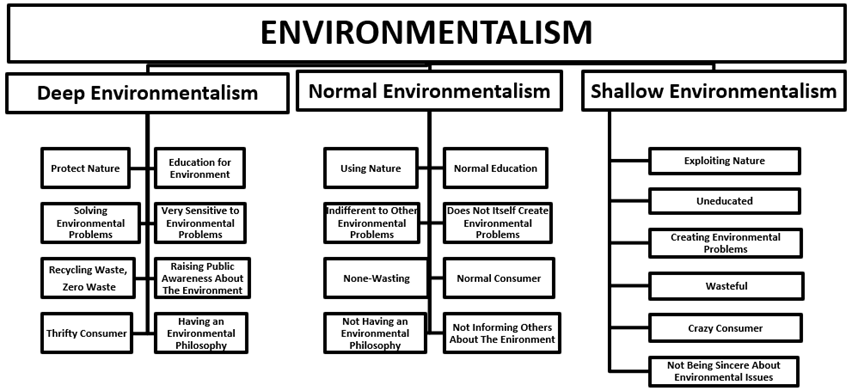
Environmental pollution is one of the current issues. Every day we are confronted with various aspects of environmental pollution, such as water, air and soil pollution, and their relations with human beings (Figure 1). However, we see that real environmental pollution reflects mental pollution. Environmental pollution has a visible part and an invisible part (background). Without understanding this background, seeing the events only superficially and technologically and perceiving the solution only technologically, i.e., “shallow environmentalism”, is the only way to produce solutions today, inadequate. Because the environmental problem has many different interrelated dimensions (Figure 2). In order to produce solutions by recognizing the deeper causes of events, we need to develop a new “human-nature relationship model”, “deep environmentalism model”, and “deep environmental education model”.
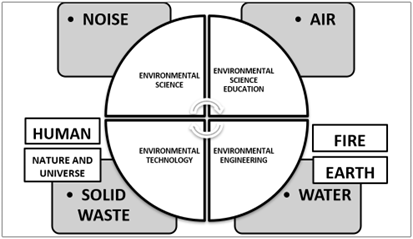
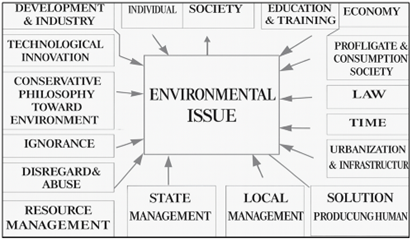
“Deep environmental education model” can be defined as developing individuals’ consciousness of living in a healthy environment, ensuring active participation in the natural, historical and cultural environment, and creating peace with nature.
When the resources, which are used extremely wastefully with the assumption that they will never end, are combined with increasing population pressure, unfavorable landscapes emerge. Climate warming, destruction of the ozone layer, destruction of forests, pollution of water resources, garbage problem, air pollution, noise, transport, chemical substances harmful to the environment, unconscious use of resources, erosion, famine and starvation are some of the most prominent problems of our world today (Button, 1990; Gürdoğan, 1989, 1991; İleri, 1998, 2007; Toffler, 1984).
Theoretically, the more the amount of water decreases, the more its value increases without limit (Şen, 2002). Water is a strategic material (İleri et al., 1997). Contrary to popular belief, it is a limited resource. Throughout human history, water has been the lifeblood and has ensured the continuation of history (Şimşek, 2005). As cities grow, they strain the capacity of local water resources and force engineers to look for sources further afield (Postel, 1999). Today, water has become an important factor in determining national and international policies (Kumbur, 2002). A report prepared by World Commission on Environmental and Development (1987) warns that in the 21st century, countries may clash with each other over water. It is stated that approximately 80 countries, home to 40% of the world’s population, are experiencing serious water shortages, and that the number of people affected has reached 1.2 billion today. According to the report, the world population will reach 8.5 billion in 2025, and at least one-third of the population will face water shortages.
Water requirements in a region depend on factors such as population density, population growth, standard of living, increased productivity in agriculture and industry, and economic development. In contrast, the amount of water available from sources such as rivers, lakes, groundwater, springs, and the sea is limited. Furthermore, since water is in motion within the hydrological cycle, its quantity at a specific place and time also varies (Erkek & Ağıralioğlu, 1993; Eroğlu, 2005; Karpuzcu, 1994; Viessman & Hammer, 1985). Although there is a total of 1.4 billion cubic kilometers of water in the world, approximately 97.4% of it is salt water and 2.6% is fresh water (Eroğlu, 2005; Ministry of Environment, 1993, 1996). Water sources contain different ions depending on the geomorphological characteristics of the regions they are located in and pass through. Water containing calcium, magnesium, and iron ions is defined as hard water (Water Foundation, 2006).
It is well known that most Middle Eastern countries suffer from water shortages, and some of these countries obtain their water at great expense by desalinating seawater. In a sense, the Middle East means desert, water, oil, and religion. Based on population growth rates in Middle Eastern countries, there will be a 50% decrease in the amount of water per capita in almost all Middle Eastern countries between 1990 and 2025 (Kumbur, 2006). It is estimated that by the middle of the next century, the world population will double to 10 billion and will have to share the same amount of water that exists today (Bulloch & Darwish, 1994; Clarke, 1991; World Commission on Environmental and Development, 1987).
The most strategic product of the 20th century was petroleum. In the 21st century, water has come to the fore in addition to petroleum (İleri, 2007). While water has become the most strategic commodity and resource, agriculture has also become the most strategic sector (Şehsuvaroğlu, 2000). According to the book “Water wars: Expected conflict in the Middle East” written by Bulloch and Darwish (1994), the history of the Middle East has always focused on wells and water. The Jordan River basin is the most important basin in the Middle East where water issues are prominent. Significant problems are likely to arise between Israel, Jordan, Palestine, and Syria, which are located in this basin. Disputes over this basin have sometimes led to intense struggles, even wars. It is an important element in Arab-Israeli negotiations (Kıran, 2005; Kumbur, 2006; Pamukçu, 2000; Zehir, 2003). The use of the waters of the Euphrates and Tigris Rivers between Türkiye, Syria, and Iraq is also being attempted to be made a topic of discussion on international platforms. Water scarcity is a real problem in the Middle East (Kumbur, 2006).
The current amount of water used in Türkiye is consumed on average 72% for agricultural irrigation, 12% for industry, and 16% for drinking and domestic use. The distribution of wastewater pollution discharges from water use by source is approximately 33% from industry, 22% from agriculture, 20% from households, 8% from mining, 8% from transportation, and 9% from other sources (Eroğlu, 2005; İleri et al., 1997; Ministry of Environment, 1993, 1996). Cities and industries around the world produce wastewater approximately 1 billion m3 every day, but a large portion of this is discharged into the receiving environment without treatment. These wastewater streams can be advanced treated and disinfected (using UV or ozone not chlorine) for agricultural purposes or as industrial process water. This could be one solution to water stress or crisis. In Türkiye, out of the 5.4 billion m3 of wastewater collected annually (as of 2024) through the sewerage network, 4.6 billion m3 are treated in conventional wastewater treatment plants. Only 1.5% (69 million m3) of this is reused in industry and agricultural irrigation (Öztürk, 2025). We must not be wasteful with water and we should understand its value before we experience drought, stress and crisis. Life without water is impossible. Water is a strategic resource. Without water, there can be no civilization. Deep environmental education and deep environmentalism teach us to appreciate nature and not to fight against it. Those who fight against nature and do not appreciate the value of the natural environment are always doomed to lose. We have to learn to live in harmony with nature and understand that we are part of it, not to exploit it. There are meaningful interactions between humans and the environment on an individual and social level; in terms of civilization, education, economics, and health. From this perspective, education for environment (formal and non-formal) is very important. It is very important to be an individual and a society that protects the environment. Human beings are part of nature, not its owners, but its stewards. Where there is nature, there are human beings.
Today, 80% of all diseases and one-third of all deaths in developing countries are caused by contaminated water (Beck, 1990; Button, 1990; Clarke, 1991; World Commission on Environmental and Development, 1987). Benjamin Franklin once said, “We only realize the value of water when the well runs dry.” What needs to be done is not to learn this lesson from Franklin through experience, but to properly value water and use it more wisely (Postel, 1999). In the Middle East’s future, water is poised to replace oil as the top strategic priority, and a “secret cold war” is underway in the region, including Türkiye. None of the Middle Eastern countries are water-rich. Türkiye is not a water-rich country. The GAP is the key to Middle East peace. Oil has the characteristics of fueling the fire, but water has a greater ability to extinguish it. With a good strategy, good planning, and international diplomacy, water can be the catalyst for true Middle East peace (Şehsuvaroğlu, 2000). The water issue presents both potential conflict and opportunities (Kıran, 2005; Şehsuvaroğlu, 2000).
According to a statement made by United Nations Educational, Scientific and Cultural Organization (2018), 3.6 billion people worldwide experience water scarcity for at least one month of the year. By 2050, it is estimated that 4.8-5.7 billion people will experience water scarcity for at least one month of the year.
Of course, in an environment where balance is maintained, water, which is the source of life through the hydrological cycle, can have a deadly effect when the natural balance is disrupted. Water pollution is one of the reasons for human illness and death. The first requirement for clean water is not to pollute water that is already clean in nature (Saatçi, 2006).
To solve current environmental problems, we must cultivate an environmentally educated population and create environmentally conscious individuals and communities through a “deep environmental education model”, from nursery to postgraduate level, encompassing both formal and informal education. “Education for the environment” should be provided throughout life. We must reduce pollution, protect the environment, establish a sustainable environmental management system, value nature, ensure a balance between environmental protection and use, become conscious producers and consumers, train educated environmental experts, and employ them based on merit. We must embrace the understanding that ‘the environment is a trust’.
Climate change is an existential threat, the seriousness of which is reflected in the Paris agreement, which requires signatory countries to reduce their emissions of greenhouse gases to levels that will limit warming to 1.5 °C above preindustrial levels. This requires significant transformation of society within a short time frame in order to achieve zero net emissions by 2050, and 50% reduction by 2030. Yet the global community is currently on track to warming greater than 3.0 °C (Hurlimann et al., 2024; World Commission on Environmental and Development, 1987).
Parts, Aims, and Problems of Environmental Education
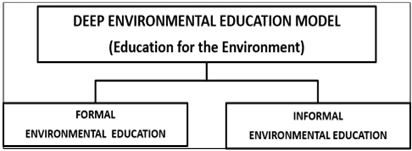
Deep environmental education model (education for the environment) can be provided formally and non-formally. Basic of elements of deep environmental education model have been given in Figure 3. Formally, it can be provided in nursery, kindergarten, primary school, secondary school, undergraduate and postgraduate education, education institutes, research and development institutes, research and technology centers etc. Informally, it can be provided in relation to the environment by families, public institutions, courses, municipalities, public education centers, state and private companies, voluntary organizations, voluntary associations, and voluntary works etc. In education for the environment (deep environmental education), it is possible to incorporate environmental issues, environmental philosophy, environmental ethics, fundamental human rights, fundamental rights of nature, human-nature interaction, the importance of protecting nature, the importance of other living beings, and contemplative reading of the book of the universe into all educational subjects and teachings. It also involves learning to become individuals and communities that are good, beneficial, honest, sincere, high-quality, and respectful of the environment and people by formal and informal environmental education.
Environmental Education in Preschool
What the child will learn about his/her environment in his/her years is divided into two as
-
recognizing the environment and
-
protecting the environment.
The correct message to be given to the child while recognizing his/her environment is that these objects, people, that is, this environment belongs to him/her and that he/she is a part of this environment. Such as “your room”, “our school”, “our family”, “our apartment”. Thus, the concept and feeling of adopting the environment and belonging to the environment will develop in the child. The next stage is to add a sense of responsibility to adoption. If the child feels a sense of responsibility towards his/her environment at a young age, he/she will tend towards environmental protective behaviors. Environmentally protective behaviours are behaviours such as keeping the room tidy by collecting the toys scattered by the child, not dirtying the house, helping to collect and put away the materials after an activity in kindergarten. At home, the acquisition of these behaviours in the family takes place primarily through example, because the young child is both an observer and an imitator. In the nursery or kindergarten environment, children can be educated about the environment through dramatization, games, experiments, storybooks and cartoons (Güven & Yılmaz, 2017).
Another educational tool that conveys information to children in the preschool period and directs them towards various behaviours is television programs. Television programs, which easily attract the child’s attention with their color, movement and sound features, are very successful materials in educating preschool children if they are prepared consciously. Problems that may be encountered in this regard:
-
lack of resources (compiling information),
-
conscious educator,
-
parent and adult education,
-
auxiliary material support, and
-
guidance manual.
Education for the Environment in Primary Education
Environmental education in primary schools can be taught as some of the following subjects
-
subjects related to environment and health in life science units,
-
subjects related to environment in social studies units, and
-
subjects related to environment and health in science units.
The study group consisted of 22 (12 boys, 10 girls) 4th grade students aged between 9-10 years, who were all studying in the same class at a central primary school in Eskişehir. Conducted throughout the 2022-2023 academic year, the research was carried out in three stages: before the implementation, after the implementation, and 9 months after completing the program. Data were obtained through drawings created by the students and interviews based on these drawings. Initially, the students’ drawings depicted basic concepts such as air, water, trees, and waste. However, after participating in the climate change education program, significant changes were observed in their understanding and perceptions of environmental issues, climate change, and sustainability. The activities of the program significantly increased the students’ awareness and comprehension of these critical issues (Pala, 2024).
Education for the Environment in Secondary Education
Studies show that spending time in nature can help to build emotional bonds and interest in nature. Hobbies in nature, such as hiking, picking flowers or fruits, planting trees, or caring for plants as well as being an active member of an environmental organization have a positive relationship with pro-environ-mental attitudes and behaviors … Studies reveal a concerning trend where children are spending a decreasing amount of time in nature and become increasingly alienated from it. Since children’s experiences in nature are declining, it is highly likely that their interest in nature is also falling. A cross-sectional study observed a downward trend in students’ interest in nature from upper secondary school (grade 9 and grade 10) to the end of high school. As possible reasons, researchers identified not only a decline in nature experiences, but a growing level of digitalization as well (Neurohr et al., 2024).
Today’s children sitting at school desks are tomorrow in offices, courts, factories and fields. They will work in schools and perhaps in the Turkish Grand National Assembly. They will be the architects of all policies and practices that may have an impact on the environment. In addition, as consumers of natural resources and voting citizens of this country, they will have a say in the decisions to be taken on natural resources. There is no doubt that one of the most important responsibilities they will assume will be the responsibilities related to the quality of the environment they live in and the sustainability of resources. In this direction, the support that the elderly will give to them in order for them to grow up knowledgeable, conscious and sensitive about environmental issues while they are still at school will be the most important economic and ecological investment we will make in the future. For this reason, educators, who are the owners of the skillful hands that shape the generations of the future, have great responsibilities before anyone else.
Environmental Education in High School Education
The main aim of education for the environment in high school education can be summarized as follows; responsible behavior in environmental issues of people who go through the education and training process. To help them grow up as citizens equipped with knowledge, skills and value judgements that enable and encourage them to exhibit. Basic ecological knowledge, awareness of environmental issues, research and evaluation, using information and problem-solving techniques, basic environmental knowledge can be gained in issues such as solving the problem.
Environmental Education in Higher Education
Universities have three important basic functions: Research on issues of interest to society, undergraduate education and, in a broader perspective, adult education. Education for the environment is a continuous process; it should continue throughout life. We have to solve the environmental problems we face today. We should not pass these problems on to future generations. Because we live on a single globe and the common future of humanity concerns us too. If we do not have sufficient knowledge about the events and substances that pollute the environment, we may unintentionally cause some major problems that threaten our future. However, the approach of protecting the environment (deep environmentalism) should always be preferred to the approach of correcting the environment after it has been destroyed (shallow environmentalism). Only societies consisting of individuals educated for the environment throughout their lives and people who have established a new “human-nature balance” can make such a choice.
Education for the environment is multidisciplinary, i.e., it encompasses many different fields of science. With biological and physical sciences, we can explain the basic events in the biosphere. With social and human sciences and learn how humanity perceives and influences the natural ecosystem. Different religio-education for the environment in which the relations between our knowledge in the planes are analyzed; classical education formed by the accumulation of hundreds of years. It takes time to be included in the university, secondary and primary education system. Because in other areas it is obvious that such changes in tendency will not be realized immediately and will take time.
Education for the environment is a multi-functional type of education. Because education for the environment makes use of all communication media; besides public institutions, voluntary organizations, industrial and commercial institutions, the press and universities take part together in all stages of education for the environment. In other words, education for the environment should be carried out in society and in all educational institutions; moreover, education for the environment cannot be limited to a specific program and level. Thus, education for the environment should be carried out in all environments where human beings are in contact.
Education for the environment aims to provide a consensus between the existing problems and the solution of these problems. Because the aim of education for the environment is to explain the complex internal structure and problems of the environment to individuals and societies, to closely follow the events related to the environment, to create a healthy environment, to make individuals aware of their rights and responsibilities and to make them conscious and effective contributors in solving environmental problems. In other words, the aim of education for the environment is to realize a sustainable development and to show people the ways of making peace with nature.
University education, which includes undergraduate and postgraduate stages, is a process in which young people gain knowledge for their future career. Young people, who are the guarantee of our future, recognize and develop their personalities and talents in their university years. Why should education for the environment be done in higher education? We can answer this question by taking into consideration the characteristics mentioned above:
-
Education for the environment should be carried out in order to train “environmental scientists” (professional environmentalism), “environmental engineers” (environmental technologists) (professional environmentalism) and “environmental science teachers” (amateur environmentalism). Since the main aim of environmental education in higher education is to teach individuals and societies the complex internal structure and problems of the environment, to provide a habitable environment and to realize a sustainable development, then professional environmentalists who will serve for the realization of this aim can only be trained through environmental sciences or environmental engineering education.
-
In order to contribute to the development of scientific research and technology for environmental protection, education for the environment should be carried out. This can only be achieved through a postgraduate education. Since educational institutions also carry out scientific research that complements education, they can only carry out studies aimed at strengthening international environmental cooperation, i.e., studies that can carry out environmental data evaluation and reporting processes and train the staff to carry out these studies only through postgraduate programs.
Education for the environment should be done in order to train teachers of environmental sciences. At the beginning of the century environmentalism was synonymous with the protection of nature, but from the last 20-25 years environmentalism has not only a current trend but also a field of great interest (Pepper, 1990). Since environmentalism is the belief that there is a better way of life, who will educate people as environmentalists from kindergarten onwards in schools outside their families? The answer to this question is undoubtedly that teachers in various educational institutions educate people to participate in environmental activities. Training kindergarten, primary and secondary school teachers is among the main duties of higher education institutions. All higher education programs that train environmental sciences teachers are aimed at training amateur environmentalists. Because those who become teachers by following these programs are expected to:
-
ensure that all their students are able to deal with environmental issues at whatever stage of education they take part in,
-
explain all measures to protect and improve the environment,
-
raise amateur environmentalists who respond to the needs of humanity and protect the environment. In fact, all higher education programs that train teachers should be aimed at training professional environmentalists from amateur environmentalism. Because among the students trained by these teachers in secondary education, professional environmentalists such as environmental scientists and environmental engineers will also serve society in the future, and
-
undergraduate students in different disciplines of higher education institutions should be trained in the environment in such a way that they will be amateur environmentalists and have knowledge on environmental issues in their professions.
Since universities are modern educational institutions and a modern education can provide individuals with the consciousness of loving nature and protecting the environment, elective environmental courses can be given in order to inform and educate undergraduate students on environmental issues other than environmental sciences and environmental engineering education. Due to its multidisciplinary characteristic, undergraduate students in classical fields such as chemistry, biology, physics, medicine, political science, economics, law, sociology, agriculture, forestry, etc. can study for the environment in order to enable them to become amateur environmentalists and even environmentalists in their future professions. For example, public administration education, in addition to courses such as urban environmental problems, environmental law, environmental policies, ecology, etc., a student will gain new dimensions to his/her future profession. This type of education, which can be realized in the form of interdisciplinary education, also contributes to creating a conscious society. Society can only learn about the rights and responsibilities of individuals and states with regard to sustainable development when it is educated for environment. Only self-control societies controlled by mechanisms can achieve a healthy environment. Thus, individuals with environmental awareness can mobilize governments and politicians’ political pressure to pass the legislation.
HOW EDUCATION FOR THE ENVIRONMENT IN HIGHER EDUCATION?
Since higher education has four main aims, we can suggest training for the environment; therefore, let us examine how these trainings can be carried out, respectively. Environmental science and environmental engineering education programs for training environmental scientists and environmental engineers vary in the USA, other developed countries, and Türkiye.
Since the 1970s, the number of universities, colleges, etc. providing undergraduate and graduate level education in various countries, including the USA, has increased rapidly along with environmental problems. In the 1970s, studies on the structure and content of environmental programs in the USA revealed differences between programs in terms of content and purpose. Although the National Science Foundation in the USA organized a Workshop in 1989 to regulate all classical education programs at the undergraduate level, environmental sciences were not addressed in this Workshop, so the differences in aims and methods in environmental programs still continue.
Since environmental sciences education is a multidisciplinary education covering biological, chemical and physical sciences and humanities, there are some difficulties in the definition of environmental sciences even in a country like the USA which has been interested in environmental sciences since 1950s. Although classical sciences such as chemistry, physics and biology are very well defined, it is very difficult to define the boundaries of environmental sciences precisely. The term environment is used together with various branches of science such as environmental physics, environmental chemistry, environmental architecture, environmental biology, environmental microbiology, environmental law, environmental health.
Firstly, the difference between an environmental scientist and an environmental engineer should be mentioned (Figure 4). Environmental scientists can mainly do the following jobs:
-
investigating the physical environment and human impact on it,
-
analyzing environmental problems, and
-
to make the measurements and analyses required by the laws and regulations in force.
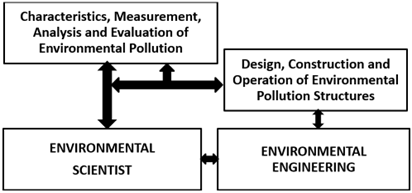
The environmental engineer does the following:
-
human health and to ensure that they can live in a favorable environment and to develop and install systems to improve the quality of the environment and
-
to protect people from the effects of the environment and the environment from the effects of people in local, regional and universal dimensions, to research the necessary systems and to establish enterprises according to this information.
In the USA, environmental scientists work in state and federal environmental bureaus, environmental planning, environmental health departments, parks, environmental consultancy offices, testing laboratories and industry. Others pursue postgraduate studies in law, environmental planning and environmental science. Environmental engineers, on the other hand, work in the fields determined by environmental scientists (World Commission on Environmental and Development, 1987).
In the solution of environmental problems, the methods developed by environmental scientists and the possibilities of technology are utilized; therefore, environmental engineers work in the treatment companies and in the related workplaces of the public sector. Undergraduate education for environmental scientists can be carried out in two ways:
-
education can be done in independent environmental science departments and
-
education can be done as an environmental science program in any of the departments with related disciplines.
According to Beck (1990) and Button (1990), who points out that environmental education in higher education should be given in an integrative approach, environmental education should be carried out in independent environmental sciences departments. Also, it is mentioned that if environmental sciences were organized in independent departments, the management would be more effective and the financial problems would be less. It is known that if the environmental science program is carried out in classical departments such as biology, physics, geology and chemistry as a diploma-oriented program, its development is hindered and its efficiency is reduced (Beck, 1990; Butto, 1990).
It is desired that environmental science education curricula should be oriented towards developing analytical and problem-solving skills and should provide the habit of using computers. In addition to ecology/environmental biology, environmental chemistry, earth sciences/physical geology, environmental policy, planning, law, environmental ethics courses, appropriate courses to improve students written and oral expression skills, laboratory and field studies should be carried out together.
Environmental Science and Environment Engineering Education at Graduate Level
Such programs can be continued as a postgraduate stage of undergraduate education in the same disciplines (environmental science and environmental engineering), or they can be aimed at postgraduate students in different disciplines. For example, graduate study in chemistry, law, agriculture, environmental science can be continued after undergraduate study; or it can be continued as graduate study following undergraduate study in any branch of environmental science, such as environmental chemistry. Students and employers who responded to the survey conducted for this purpose in the USA also indicated that those who completed undergraduate environmental education by following interdisciplinary programs had a much better chance of graduate study in environmental sciences. People who will carry out postgraduate studies in environmental engineering are generally required to have undergraduate degrees such as environmental engineer, chemical engineer, civil engineer, biologist.
Training of Teachers to Educate Preschool, Primary and Secondary School Students for the Environment
In 2023 a new transformed curriculum was introduced at the University of Namibia, in which a few changes were made to the environmental education courses. One reason behind revising the environmental education curriculum was to align the courses with governmental policies… To address the lack of environmental education in teacher education at the Finnish university, an introductory course on environmental education was created in 2019 and at the time of writing the course is being taught for its fifth consecutive year. The course is an optional five credit (ECT) course and open to students from all faculties and is taught each academic year. In 2021 it was selected to be part of the university’s sustainable development minor that allows students to choose from a wide range of sustainability-related courses, encouraging interdisciplinary learning. While we believe that a course such as this one should be open to all students, we also believe that having a core component on sustainability and environmental education as a requirement for pre-service teachers is necessary, given that teachers are expected to include sustainability content in their teaching, as outlined in the national core curriculum … Therefore, teachers are an important factor in a broader community of practice, and sustainability can begin with them, but with the comprehensive support and groundwork of a diverse range of actors in building this community (Saari et al., 2024).
Education for the environment in society can only be successful if it is supported by education for the environment in pre-school, primary and secondary schools. Because in countries like Türkiye, where the young population (average age 19) constitutes the majority of the society, the implementation of measures for environmental protection can only be possible if the young population is aware of environmental issues.
It is possible with a high level of awareness of the environment. Education for the environment in these schools is based on the existing physics, chemistry, and biology. Since environmental education can be carried out within courses such as sociology or as independent courses, the methods to be followed in the training of teachers who will take part in this education will also differ. Therefore, education for the environment in teacher training higher education programs can be carried out in two different ways:
-
Classical physics, biology and chemistry programs can be supplemented with environmental science courses.
-
Graduates of independent environmental science departments can be directed directly to teaching.
Existing teachers in the USA have been involved in special radio and TV programs on the environment; they were trained through the “Union for Environmental Education”. Starting from the 2018-2019 academic year, courses related to Environmental Education have been included in the updated programs of education faculties that train teachers in Türkiye, in various departments and different periods, as determined by the Council of Higher Education (Kurt, 2020).
Undergraduate and Graduate Education Supported by Selective Environmental Science Courses
Since education for the environment is multidisciplinary, a student studying for a bachelor’s degree in any program of higher education institutions can choose a course or courses in environmental sciences education programs and direct his/her future profession to a field that is suitable for the application of environmentalism. For example, future administrators, managers, mechanical, textile and agricultural engineers can take courses in environmental science and/or environmental technology from their undergraduate department or from other departments with the advice of their counsellors.
In fact, it is not possible to offer such elective courses in many universities. For example, although there are environmental chemistry courses in every environmental sciences program, it is seen that environmental courses are not taught in chemistry departments. However, every chemist should be sufficiently knowledgeable about environmental issues. The reasons for this can be listed as follows:
-
faculties do not want to take on additional course loads,
-
there are not enough lecturers in faculties to teach environmental courses, and
-
environmental engineering and environmental sciences programs and studies are withdrawn.
In fact, higher education institutions should initiate elective course applications without hesitation, because only such diversity can provide new horizons for young people in our country with employment problems, and individuals who are sensitive to environmental problems can be raised through elective education programs.
The facts revealed by research carried out in order to determine the realization are as follows:
-
Unfortunately, environmental education at the undergraduate level is not organized separately to train environmental scientists and environmental engineers.
-
In the 1996-1997 academic year, environmental engineering education at the undergraduate level (4 years) is provided in 21 universities. A total of 802 students is enrolled in formal education and 185 students are enrolled in secondary education. In addition, there are 2 two-year vocational high schools.
-
In all environmental engineering programs, the weight of environmental sciences courses is very different, but engineering courses are quite high in these programs. Due to the fact that those who have the title of “engineer” have a better chance of finding a job in both private and state institutions, engineering departments have been opened in universities in our country, as in the USA and other countries.
-
On the other hand, Boğaziçi University has an institute for postgraduate education in environmental engineering and environmental sciences, which can be attended by those who have bachelor’s degrees from different disciplines. In other universities, environmental engineering graduate programs are carried out by the relevant graduate school of natural and applied sciences.
-
Departments or programs for training environmental sciences teachers have not been opened yet (Çamur, 1996; İleri, 1998; Turkish Chamber of Environmental Engineers [TMMOB ÇMO], 1993).
Education for the Environment at the Non-Formal Education Level
It is clear that education for the environment, which has a lifelong characteristic, should be considered and applied at all stages of life. It is a common approach to analyze education practices by categorizing them into two main groups as formal and non-formal (informal). It is no longer accepted to define non-formal education as education outside the school and formal education and as education outside the system. Non-formal education is regarded as a sub-system of the education system and is seen as a set of practices covering education services organized at the national level for the adult population in order to meet the educational needs of individuals. With such an understanding, non-formal education is not an educational practice in which those who have not been able to attend school are given certain information and are provided with certain vocational skills.
It is an educational practice that can be utilized in order to meet the needs of the environment. In this respect, we have tried to summarize the definition and basic concepts of education for the environment, it is of great importance that non-formal education takes place within the non-formal education system and practices (Environment Foundation of Türkiye [TÜÇEV], 1993). In conclusion, environmental education for a sustainable future is not limited to educational institutions. Public institutions and civil society organizations are also important actors in environmental education. These institutions raise environmental awareness in society. The media is also an effective tool in the environmental education process. The media’s role in bringing environmental issues to the forefront and raising awareness significantly contributes to society’s environmental education (Gocer et al., 2025).
Non-formal education is based on the characteristics and programs of formal education when, as in our country, it is organized as programs aimed at providing citizens with skills, preparing them for a job and ensuring their development in the job they have entered, because they cannot benefit from formal education. For example, apprenticeship training, vocational courses. However, in addition to this, the state and society need to utilize the concept and practices of non-formal education in approaching and seeking solutions to the major problems encountered. In this way, it will be possible to achieve results such as ensuring the participation of large masses of people, obtaining their support and realizing the implementation of the solutions produced. As it is often repeated, the idea of seeing the solution to the major problems encountered in society in “education” and expecting solutions from it is unrealistic.
We can achieve this through the organization of non-formal education. The necessity of addressing issues such as traffic problems, environmental pollution and destruction of the environment through education is widely recognized. In this respect, it is necessary to consider and develop non-formal education as a tool and practice that accelerates and regulates social change and balanced-continuous development, as well as social and national awareness and democratic lifestyle in developing countries as in developed countries.
We see that education for the environment is handled with concepts such as citizenship education, public education or public education by emphasizing its basic functions such as providing information, helping to solve problems, enabling individuals to participate in activities. It is an appropriate approach to integrate citizenship education, which is formed through programs dealing with collective life, cooperation, democracy, community development, cooperation and solidarity, with the aim of education for the environment as non-formal education. Education for the environment should be provided in the form of educating citizens for their lives by recognizing, protecting and developing their environment (Spretnak & Capra, 1990). The basis of the understanding of “deep environmentalism” is to encompass the whole society and make them participants (Figure 5).
The aims of education for the environment as non-formal education can be summarized as follows:
-
awareness of the environment and environmental problems and developing sensitivity,
-
providing information about the environment and environmental problems,
-
ensuring the development of positive and realistic attitudes towards the environment,
-
dissemination of the philosophy necessary for the development and protection of the environment (Sesen, 2015),
-
development of skills and approaches in the processes and approaches of identifying, understanding and solving the environment and environmental problems, and
-
participation in the formation, protection and solution of environmental problems.
It can be easily determined that these objectives are not the objectives of education for the environment only in the form of non-formal education. However, these objectives can be achieved in the most realistic way and in a way that is transformed into action and behavior through the practices of education for the environment to be established at the non- formal education level. Education for the environment at the non-formal education level also includes processes such as eliminating inadequacies, providing reinforcement and evaluating the results by addressing the results of the practices in formal education. Education for the environment at the non- formal education level, to a certain extent different from that in formal education, involves the citizens’ and the public’s value judgements about the environment and life, experiences of social change, attitudes and it envisages the work to be done in order to have an impact on their behavior. It provides society with a deep understanding of the triangle of creator-nature-human beings and a friendly view of the universe (Canan, 1986; İleri, 1998; Uslu, 1995).
Although local, national and regional “circles” to the local community. Although different, the concepts and principles of citizenship education, non-formal education and education for the environment can be applied everywhere. The main ones of these concepts and principles can be summarized as follows:
-
As mentioned above, education for the environment should be addressed to all citizens, professionals and groups that have an impact on the environment, and academic and technical professionals who are concerned with environmental problems.
-
Education for the environment should be handled and implemented in relation to real life.
-
Education for the environment should cover all subjects and be programd as a lifelong process, considering that the environment is a whole and more than the sum of its constituent parts.
-
Education for the environment should be planned in such a way that it aims to inform, raise awareness and warn citizens about environmental problems and hazards rather than frighten or threaten them.
-
Education for the environment should make use of media and tools such as TV, radio, newspapers, magazines, magazines, cinemas, conferences, congresses, various campaigns (tree planting, cleaning the environment, garbage collection, green belt practices, sports activities in nature, nature contemplation trips, etc.) and competitions within and outside the formal education system and institutions.
-
Education for the environment should enable the training of decision-making and participatory individuals and responsible people in economic, social and ecological activities.
Some may argue that the concepts and principles mentioned above are realized in the implementation of social activities, education, health, economy, management, industry, etc., that it is unnecessary to consider them as a separate educational practice and education for the environment, and that if repeated, it would lead to a waste of resources and manpower. In other words, there may be those who say that education for the environment should be provided by providing information within formal education and that we should not invest in education for the environment as citizenship education. Their views and arguments can be briefly responded to with a few remarks on why education for the environment is needed at the non-formal education level:
-
the attitudes, behaviours, actions and value judgements necessary to improve and protect the quality of the environment should be developed in everyone,
-
for the balance between development, industrialization, the social system and life and the ecosystem to be recognized and protected by all,
-
for human beings to become aware of and appreciate their dependence on their natural and self-created environment,
-
for the necessity of the conscious use of non- renewable resources to be recognized and understood by all,
-
destruction of the environment and misuse of,
-
for everyone to realize that environmental pollution reflects mental pollution in society,
-
for the individual to realize that he/she is not only economic, atomistic and detached from other individuals, and
-
for the need for the will to live together.
Since education is necessary for the environment, it is important to address this issue at the level of non-formal education. In addition to all other activities, education is also necessary in order to raise the awareness of those living in the environment about the “environment”. It is inevitable to organize and implement this education in such a way that it reaches everyone. Within the framework of the characteristics of the regions and localities, local working groups and volunteer groups can be formed to ensure that citizens get to know their environment and use it consciously, and programs c a n be made and implemented. Instead of sending programs from the center, it can be planned to make local programs through trained experts and to ensure the participation of citizens and those affected by environmental problems in that region. In education for the environment; aim, responsible persons, programs, equipment, instructors and evaluation are the main elements and providing these should be the first step. In this way, it will be ensured that the activities and programs on TV, radio and in the press on the subjects covered by education for the environment are developed within the scope and purpose of education, and that these piecemeal activities are integrated and become meaningful for the environment and human relations with the environment.
Education for the environment, especially in the dimension of education, within the framework of the importance and actuality of the subject, should be handled with an approach and development that ensures the effective participation of voluntary persons and organizations in a manner similar to the wide, comprehensive and continuous initiatives and projects such as community development, war against tuberculosis, war against malaria, literacy mobilization that have been implemented in our country. We think that a development and implementation in accordance with the definition we have given in the first section on education for the environment will thus be ensured. Not by ringing alarm bells, but by informing, raising awareness, warning, informing the public and it is necessary to associate life with the environment. Education and training can be provided to the public in the natural environment, museums, zoos and similar places by planning to train educational and instructive staff, prepare information forms, booklets, create and produce materials such as slides, films, etc. required by an environmental education program whose purpose, content and methods will be determined. Local administrations, schools, youth centers, public houses. Various non-formal education institutions of national education, sports activities, army training centers, mosques, churches, synagogues, temples, and places of worship and voluntary organizations can be considered for environmental information and awareness-raising activities.
CONCLUSIONS, DISCUSSIONS, AND RECOMMENDATIONS
Effective environmental education should address not only environmental issues but also the cultural, economic, and political systems that contribute to them, including poverty, racial segregation, and overconsumption. Furthermore, environmental education itself is embedded within political-economic systems, raising concerns about its alignment with neoliberal dynamics. Therefore, understanding environmental education’s role within broader political-economic contexts is crucial for fostering meaningful change (Chawla, 2020; Haluza-DeLay, 2013; Hursh et al., 2015; Neurohr et al., 2024; Soga & Gaston, 2016).
Environmental literacy involves the knowledge of issues, which includes beliefs that humans and the environment have a relationship within natural systems and continually impact each other (Wagner, 2025). Environmental education of young people enables necessary synthesis of knowledge whose aim is to protect and improve the environment. Through the planned educational system, the environmental knowledge is developed, the knowledge of basic characteristics of the environment and ways of preserving and improving the environment, as well as the knowledge of basic environmental issues of the modern society (Borojevic et al., 2012).
Throughout history, it has always been easy to feed the hungry and quench the thirst, but it has never been possible to satisfy the greedy. We must adapt our education system to the ‘new human model’, the ‘deep environmentalism model’ and the ‘deep environmental education (education for the environment) model’ and ‘participation providing model’, which redefine human and the environment and seek to discover ways of reconciliation with them. Educational institutions are the sacred hearths where the torches that illuminate the future of the youth of the country and the society are ignited and where they are given great horizons. The starting point for the prevention of environmental pollution and the protection of the environment should be the focusing of human activities and behavioral patterns in the direction of environmental sensitivity. In order to protect the environment, it is necessary to love, to know in order to love, to think and research in order to know, to share responsibility and to be a participant in solutions. The main purpose of the environmental educator should be to mobilize this process. Some suggestions for increasing environmental education and participation can be given as follows:
-
Environmental faculties should be established in higher education institutions and environmental science; environmental engineering and environmental science teaching education should be carried out in different departments.
-
Environmental engineers, environmental scientists and environmental science teachers should be trained with an integrated approach. Multimedia interaction should be considered when analyzing the effects of a pollutant on the natural environment; that is, similarities between different environments should be compared. Integrated environmental education utilizes a wide range of knowledge and all analytical tools. However, most of the environmental science books are not prepared with an integrated approach.
-
Elective environmental courses can be given to students in other undergraduate programs due to the multidisciplinary nature of environmental education. Only in this way can amateur environmentalists who can open new horizons in their professions be trained.
-
Teachers who will take part in the education of the society, primary and secondary school students should be trained with an interdisciplinary education.
-
In our higher education institutions, staff who can provide environmental science education should be trained through postgraduate education.
-
The staff to provide environmental education in pre-school, basic and secondary education institutions can be trained in environmental science teaching programs of environmental faculties.
Funding: No external funding is received for this article.
Ethical statement: The author stated that this study did not require ethical approval or informed consent because it reviewed existing literature and did not involve new data collection from human participants.
AI statement: The author stated that control of English language has been used DeepL Translator (free version).
Declaration of interest: The author declares that there are no competing interests.
Availability of data and materials: All data generated or analyzed during this study are available for sharing when appropriate request is directed to the author.
References
- Baloğlu, Z. (1996). Education in Turkey. Yeni Yüzyıl Kitaplığı.
- Beck, J. M. (1990). Environment and the third world. Endülüs Yayınları.
- Borojevic, T., Petrovic, N. B., & Vuk, D. (2014). Youth and environmental education for sustainable development. International Journal of Science and Research, 3(9), 57-62.
- Bulloch, J., & Darwish, A. (1994). Water wars: Coming conflicts in the Middle East. Altın Kitaplar Publications.
- Button, J. (1990. How to be green. Century Publishing.
- Çamur, H. (1996). General status of environmental engineering education in Turkey. Journal of Environment and Engineer, 12.
- Canan, I. (1986). Environmental health in Islam. Cihan Publications.
- Chawla, L. (2020). Childhood nature connection and constructive hope: A review of research on connecting with nature and coping with environmental loss. British Ecological Society People and Nature, 2(3), 619-642. https://doi.org/10.1002/pan3.10128
- Clarke, R. (1996). Water: The international crisis. Earthscan Publications Ltd.
- EPA. (2025). What is environmental education? Environmental Protection Agency. https://www.epa.gov/education/what-environmental-education
- Erkek, C., & Ağıralioğlu, N. (1993). Water resources engineering. Beta Publishing Inc.
- Eroğlu, V. (2005). Water world. State Water Works.
- Gocer, M., Canik, S., Demirdelen, A., Yilmaz, O., & Aytek, G. (2025). Environmental education in Turkey for a sustainable future. Geography with Multidisciplinary Approaches, 3(1), 33-44. https://doi.org/10.29329/mdag.2025.1289.3
- Gürdoğan, E. N. (1989). Dimension of pollution. İnsan Yayınları.
- Gürdoğan, E. N. (1991). Beyond technology. İz Publishing.
- Güven, S., & Yılmaz, N. (2017). Role and importance of family at preschool children environmental education. European Journal of Sustainable Development, 6(4), 105-114. https://doi.org/10.14207/ejsd. 2017.v6n4p105
- Haluza-Delay, R. (2013). Education for environmental justice. In R. B. Stevenson, M. Brody, J. Dillon, & A. E. J. Wals (Eds.), International handbook of research on environmental education (pp. 394-403). Routledge. https://doi.org/10.4324/9780203813331-53
- Hurlimann, A., Iftikhar, N., & Liu, J. (2024). A framework for climate change curriculum redevelopment within built environment professional degrees. Environmental Education Research, 31(11), 2230-2256. https://doi.org/10.1080/13504622.2024.2403403
- Hursh, D., Henderson, J., & Greenwood, D. (2015). Environmental education in a neoliberal climate. Environmental Education Research, 21(3), 299-318. https://doi.org/10.1080/13504622.2015.1018141
- İleri, R. (1998). Environmental education and supplement. Ekoloji Çevre Dergisi, 28.
- İleri, R. (2007). Water: White petroleum. e-Belediye Dergisi, 12.
- İleri, R., Sümer, B., Şengil, A., Şengörür, B., & Gemci, T. (1997). Water: Strategic material ve priorities in its protection. In Proceedings of the Symposium on Priorities of Environmental Pollution in Turkey. Gebze Institute of High Technology.
- Karpuzcu, M. (1994). Environmental pollution and control. Kubbealtı Publications.
- Kıran, A. (2005). Water in the Middle East: An area of conflict or compromise. Kitap Publishing.
- Kumbur, H. (2006). Water potential in Middle Eastern countries, problems encountered, and alternative solutions. Journal of Water and Environmental Technologies, 8.
- Kurt, M. (2020). Environmental engineering. Eğiten Kitap Publication.
- Lowan-Trudeau, G. (2023). Digital technologies and environmental education. The Journal of Environmental Education, 54(1), 1-7. https://doi.org/10.1080/00958964.2022.2152413
- Ministry of Environment. (1993). Urbanization, and climate change, environment and Ministry of Environment, green series 1. Ajans-Türk Printing Industry Inc.
- Ministry of Environment. (1996). Urbanization, and climate change, environmental protection guidebook. Special Environmental Protection Agency Presidency.
- Neurohr, A. L., Pasch, N., Bergmann-Gering, A., & Möller, A. (2024). Linking students’ interest in nature to their self-reported pro-environmental behavior and nature activities–A cross-sectional study in grade 5 to 9. The Journal of Environmental Education, 55(6), 460-479. https://doi.org/10.1080/00958964.2024.2364182
- Öztürk, M. (2025). MNE project, environmental projects, environmental consultant. LinkedIn. https://tr.linkedin.com/in/mehmet-%C3%B6zt%C3%BCrk-6b37baaa
- Pala, F. (2024). A study on the perceptions of Turkish primary school students regarding the environment, climate change, and sustainability. The Journal of Environmental Education, 56(1), 49-64. https://doi.org/10.1080/00958964.2024.2427063
- Pamukçu, K. (2000). Water policy. Bağlam Publications.
- Pepper, D. (1990). The roots of modern environmentalism. Routledge.
- Postel, S. (1999). The last oasis. TÜBİTAK-TEMA Foundation Publications.
- Saari, M. H., Poulton-Busler, R., & Vladimirova, A. (2024). Does sustainability really start with teachers? Reflections on integrating environmental education in pre-service teacher education in Namibia and Finland. The Journal of Environmental Education, 55(6), 494-508. https://doi.org/10.1080/00958964.2024.2375210
- Saatçi, A. M. (2005). Water world. State Water Works.
- Şehsuvaroğlu, L. (2000). Water peace: Water politics for Turkey and Middle East. Gümüşmotif Yayınları.
- Şen, Z. (2002). Water resources and importance of water for thirsty societies. Water Foundation Publications.
- Sesen, E. (2015). Public relations in environmental education: An example practice from Turkey, Macrothink Institute. Journal of Social Science Studies, 2(2), 134-147. https://doi.org/10.5296/jsss.v2i2.7392
- Şimşek, E. (2005). Turkey’s Middle East policy. Kum Saati Publishing.
- Soga, M., & Gaston, K. J. (2016). Extinction of experience: The loss of human-nature interactions. Frontiers in Ecology and the Environment, 14(2), 94-101. https://doi.org/10.1002/fee.1225
- Spretnak, C., & Capra, F. (1990). Green politics. Polodin Grofton Books.
- TMMOB ÇMO. (1993). Environmental engineering education and problems in Turkey. Turkish Chamber of Environmental Engineers.
- Toffler, A. (1984). What future awaits the world? İz Publishing.
- TÜÇEV. (1993). Environmental education. Environment Foundation of Turkey.
- United Nations Educational, Scientific and Cultural Organization. (2018). Urban climate change research network. UNESCO.
- Uslu, I. (1995). Problems of environment: From changes in universe design to ecological disasters. İnsan Publications.
- Viessman, J. W., & Hammer, J. M. (1985). Water supply and pollution control. Harper Collins Publications Inc.
- Wagner, L. E. (2025). Exploring Lake Endor: Elementary preservice teachers’ environmental literacy in a science methods course. Interdisciplinary Journal of Environmental and Science Education, 21(3), Article e2511. https://doi.org/10.29333/ijese/16570
- World Commission on Environmental and Development. (1987). Our common future. Oxford University Press.
- Zehir, C. (2003). From water civilizations to water wars in the Middle East. Water Foundation.
How to cite this article
APA
İleri, R. (2026). Deep environmental education model for solution of existing water and environmental problems. Aquademia, 10(1), ep26003. https://doi.org/10.29333/aquademia/17844
Vancouver
İleri R. Deep environmental education model for solution of existing water and environmental problems. AQUADEMIA. 2026;10(1):ep26003. https://doi.org/10.29333/aquademia/17844
AMA
İleri R. Deep environmental education model for solution of existing water and environmental problems. AQUADEMIA. 2026;10(1), ep26003. https://doi.org/10.29333/aquademia/17844
Chicago
İleri, Recep. "Deep environmental education model for solution of existing water and environmental problems". Aquademia 2026 10 no. 1 (2026): ep26003. https://doi.org/10.29333/aquademia/17844
Harvard
İleri, R. (2026). Deep environmental education model for solution of existing water and environmental problems. Aquademia, 10(1), ep26003. https://doi.org/10.29333/aquademia/17844
MLA
İleri, Recep "Deep environmental education model for solution of existing water and environmental problems". Aquademia, vol. 10, no. 1, 2026, ep26003. https://doi.org/10.29333/aquademia/17844